Geography
Discover how Geography comes to life at Park Street - how we spark curiosity, build confidence and create engaging learning experiences that help children develop geographical knowledge, skills and a love of exploring the world so every child can flourish.
INTENT
At Park Street, our aim is to develop pupils’ curiosity about the world and the people within it. We want children to explore places, understand different environments and recognise how human and physical processes shape the world around them.
Our curriculum aims to build secure geographical knowledge while developing strong enquiry skills that pupils can apply across the curriculum. Children learn to ask questions, investigate, interpret information and make meaningful connections between places, people and environments. We also want pupils to understand their own place in the world and why caring for it matters.
We aim to inspire a lifelong fascination with both the local area and the wider world. Through learning about diverse places, cultures and landscapes, pupils gain a broader understanding of the world and the people who live in it.
We intend for children to develop key geographical skills such as using maps, globes and aerial photographs, collecting and analysing data, and communicating their findings in different ways. Fieldwork and educational visits play an important role in bringing geography to life and helping pupils apply their learning beyond the classroom.
Ultimately, we want our pupils to become confident, independent and resilient learners who enjoy geography, build on prior knowledge and transfer their skills to other areas of learning.
IMPLEMENTATION
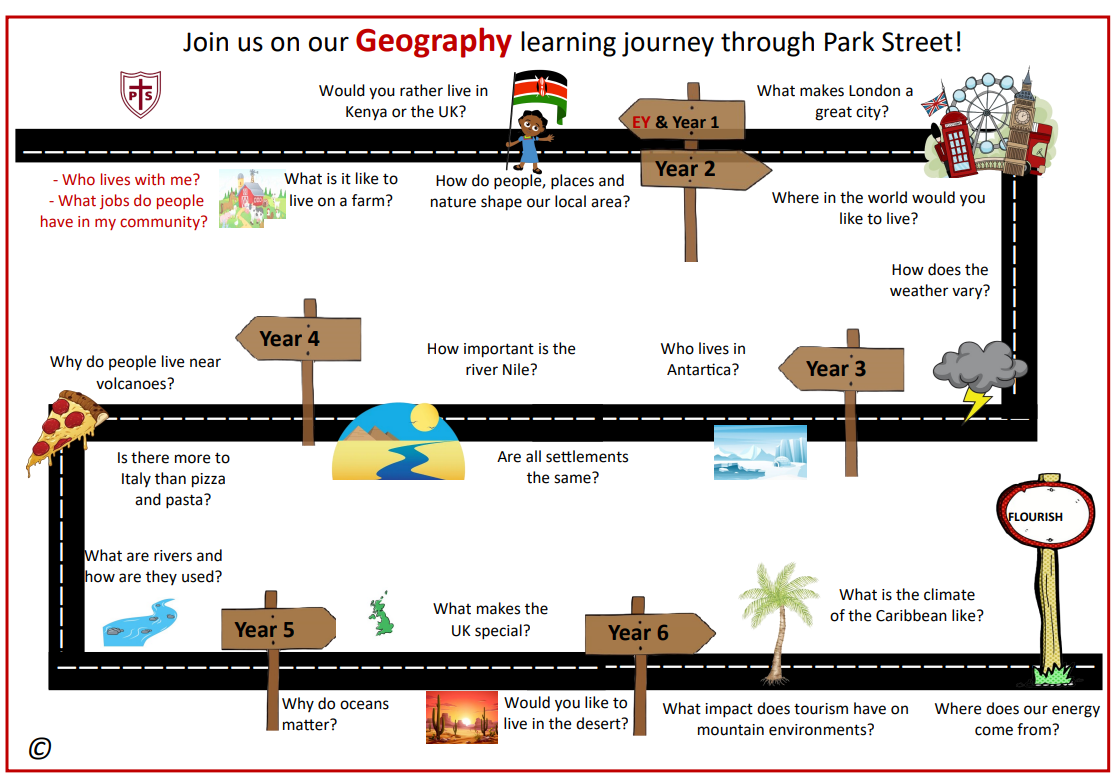
Geography at Park Street is taught through a well‑sequenced curriculum that builds pupils’ knowledge and skills year by year. Each unit revisits and deepens key ideas so that children can make meaningful connections between places, people and environments. Lessons are practical, engaging and enquiry‑led, encouraging pupils to ask questions, investigate evidence and think like geographers.
Children learn to use a range of geographical resources, including maps, atlases, globes, aerial photographs and digital tools. They develop skills in observing, recording, interpreting and presenting geographical information in different ways. Vocabulary is taught explicitly and revisited regularly so pupils can talk confidently about their learning.
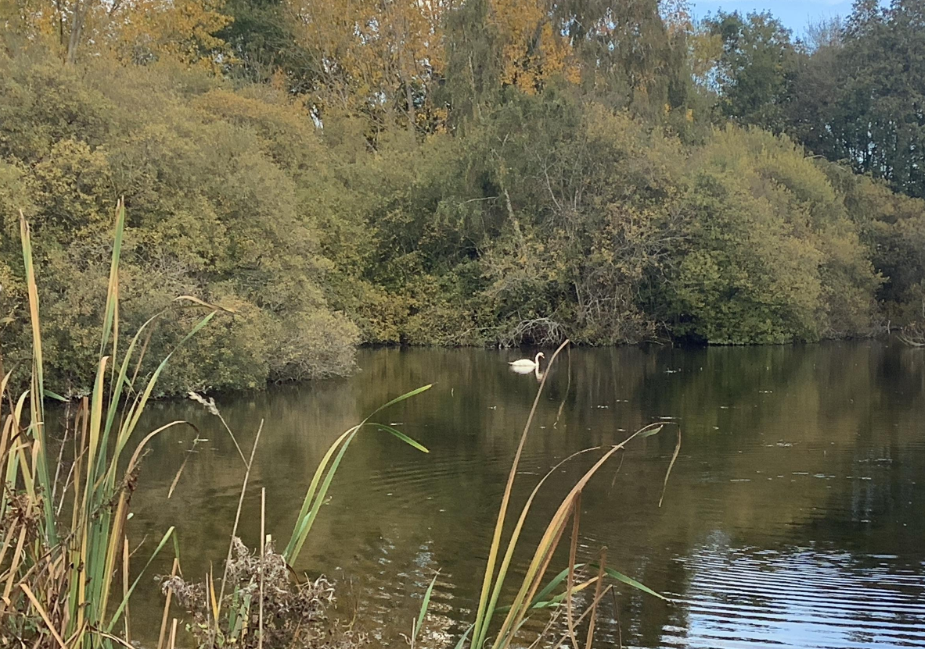
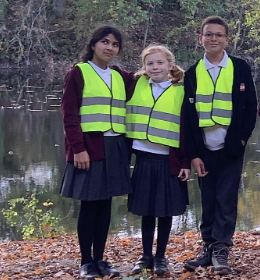
Fieldwork is a key part of our approach. Our large, spacious school grounds provide excellent opportunities for pupils to explore physical and human features, practise mapping skills and carry out simple surveys. We also make full use of our local environment, including the River Ver right on our doorstep, to support high‑quality fieldwork linked to rivers, habitats, land use and environmental change. These real‑world experiences help children apply classroom learning, develop enquiry skills and gain a deeper understanding of their local area.
Cross‑curricular links enrich learning further, allowing pupils to connect geography with subjects such as science, history, maths and art. Children work individually, in pairs and in groups to investigate questions, solve problems and share their findings.
Our approach ensures that all pupils experience a broad, engaging and meaningful geography curriculum that builds confidence, curiosity and a strong understanding of the world around them.